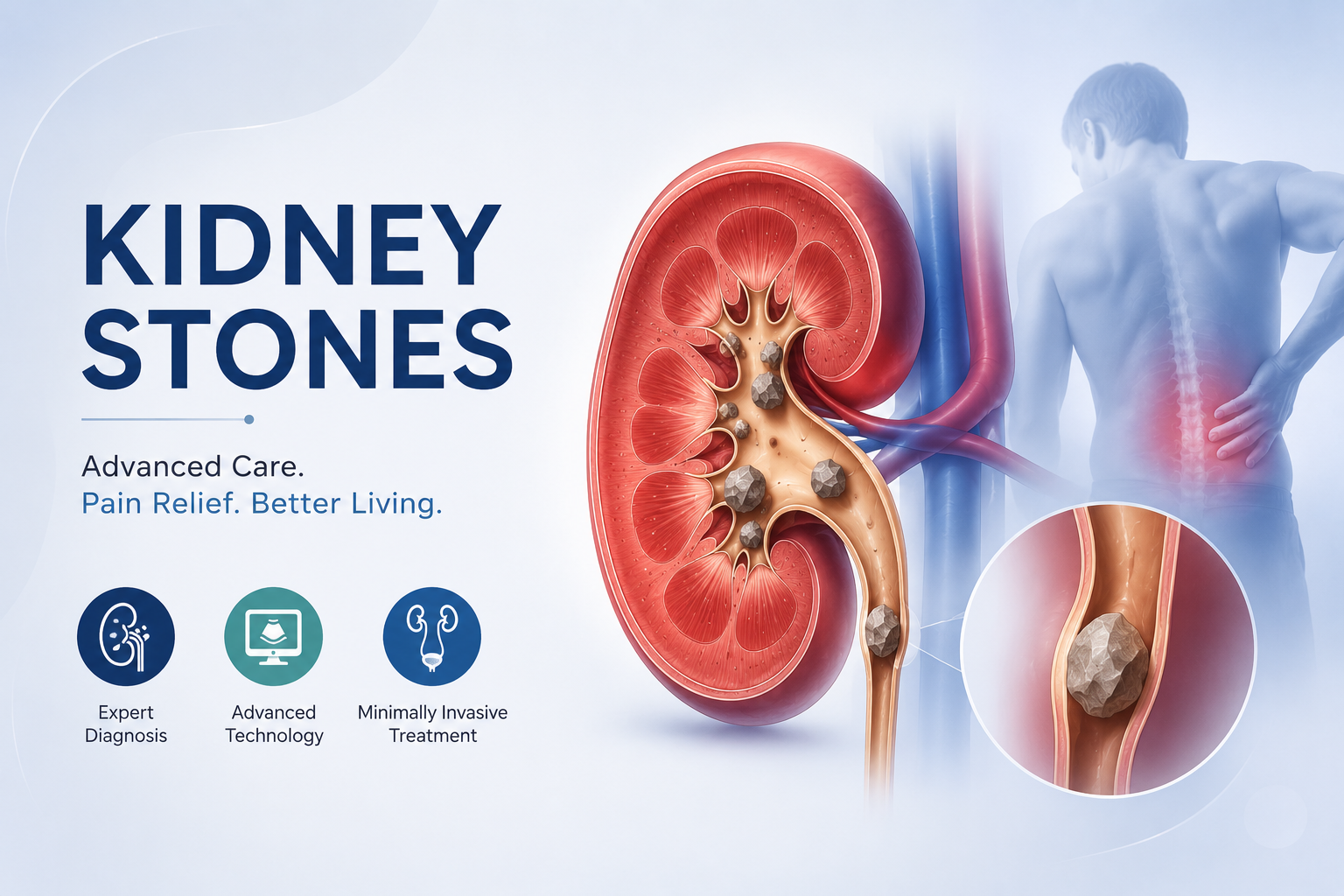
Kidney Stones
Kidney stones are one of the most common urological conditions, affecting people of all ages. They occur when minerals and salts in the urine crystallize and form hard deposits within the kidneys. Stones can vary in size, from tiny crystals that pass unnoticed to larger stones that may cause severe pain and blockage of urine flow. Early diagnosis and appropriate treatment are important to relieve symptoms, prevent complications, and preserve kidney function.
What Are Kidney Stones?
Kidney stones are hard deposits made of minerals and salts that form inside the kidneys. They develop when the urine becomes concentrated, allowing minerals such as calcium, oxalate, and uric acid to crystallize and stick together. Stones may remain in the kidney or travel into the ureter (the tube connecting the kidney to the bladder), where they can cause obstruction and pain.
Common risk factors include:
- Inadequate water intake (dehydration)
- High salt or high-protein diet
- Family history of kidney stones
- Obesity and metabolic disorders
- Recurrent urinary tract infections
- Certain medical conditions such as gout or hyperparathyroidism
Symptoms
The symptoms of kidney stones depend on their size and location. Small stones may cause no symptoms and be detected incidentally during imaging studies. Larger stones or stones causing blockage can lead to:
- Severe pain in the back, side, or lower abdomen
- Pain that radiates to the groin
- Burning sensation during urination
- Blood in the urine (hematuria)
- Frequent urge to urinate
- Nausea and vomiting
- Fever and chills if infection is present
- Difficulty passing urine in severe cases
Any patient experiencing severe pain, fever, or difficulty passing urine should seek immediate medical attention.
Investigations
A thorough evaluation helps determine the size, location, and composition of the stone and guides treatment planning.
Common investigations include:
- Urine Examination: To detect blood, infection, or crystal formation.
- Blood Tests: To assess kidney function and identify metabolic abnormalities.
- Ultrasound (USG): A safe and commonly used imaging test to detect stones and kidney swelling.
- X-ray KUB: Useful for identifying certain types of stones.
- CT Scan (NCCT KUB): The most accurate investigation for diagnosing kidney stones and assessing their size and location.
- Metabolic Evaluation: Recommended for patients with recurrent stone disease to identify underlying causes and prevent future stone formation.
Treatment
Treatment depends on the size, location, and type of stone, as well as the severity of symptoms.
Conservative Management
Small stones may pass naturally with:
- Increased fluid intake
- Pain-relieving medications
- Medicines that help relax the urinary tract and facilitate stone passage
- Dietary modifications and preventive measures
Minimally Invasive Procedures
When stones are large, painful, causing obstruction, or unlikely to pass on their own, surgical treatment may be recommended.
Ureteroscopy (URS):
A thin telescope is passed through the urinary passage to locate and remove or fragment stones in the ureter.
Retrograde Intrarenal Surgery (RIRS):
A flexible laser scope is used to treat kidney stones without any external incision. This is particularly useful for small to medium-sized kidney stones.
Mini-PCNL (Mini Percutaneous Nephrolithotomy):
A minimally invasive procedure performed through a small puncture in the back to remove larger kidney stones.
PCNL (Percutaneous Nephrolithotomy):
The preferred treatment for large or complex kidney stones, offering high stone clearance rates.
Prevention of Kidney Stones
Preventing recurrence is an important part of kidney stone management. Patients are advised to:
- Drink adequate water throughout the day
- Reduce excessive salt intake
- Maintain a balanced diet
- Limit foods that contribute to stone formation when appropriate
- Manage underlying medical conditions
- Follow up regularly if they have a history of recurrent stones
With modern diagnostic techniques and advanced minimally invasive treatments, most kidney stones can be treated effectively, allowing patients to return quickly to their normal activities while protecting long-term kidney health.